South Africa has no reliable national statistics on electrical product compliance, with independent industry testing consistently showing high failure rates, says voluntary electrical safety association, Safehouse. Most South Africans assume that if a product is sold in a store, it must be safe because the retailer has vetted it. Unfortunately, that isn’t always true.
Many products available on our shelves fail to meet basic safety requirements. And while non-compliant electrical products are not always immediately dangerous or seen upfront as dangerous, they can pose significant risks. More concerning is the systemic threat of South Africa’s illicit electrical goods trade and the far-reaching consequences it has on consumer safety, economic stability and industrial sustainability.
Safehouse was founded in 2014 in response to ineffective regulation and the lack of robust market oversight by the National Regulator for Compulsory Specifications (NRCS), which relies primarily on administrative approvals and single-type test reports. Without ongoing quality control, the risk of undetected non-compliance increases significantly, creating a system that can be exploited by certain importers and unscrupulous local manufacturers to sell a wide range of products under a single approval certificate. Compounding the problem is the NRCS’s refusal to publicly disclose non-compliant products, a practice that leaves all consumers exposed to unnecessary risk.
The South Africa Illicit Economy 2.0 Report, launched by the Transnational Alliance to Combat Illicit Trade (TRACIT) in conjunction with Business Unity South Africa (Busa) earlier this year, states that South Africa’s illicit trade is estimated at R100 billion, or about 1.5% of our GDP. This figure barely captures the wider damage it inflicts on lawful manufacturers, retailers, employees, and tax revenue. And while the NRCS is making some effort to control non-compliant and illicit products across sectors, including building materials, automotive components, chemicals and electrical products, its overall enforcement reaches less than 0.5% of South Africa’s illicit trade.
“Robust processes are being put in place thanks to our members’ continued commitment to product safety and regulatory compliance.
Consumers can now make more informed and reliable choices by selecting products bearing the Safehouse mark and checking the Safehouse website to verify suppliers and businesses that are accredited members,” says Safehouse’s Technical Lead and Chairperson, Connie Jonker.
According to South African civil society organisation, Tax Justice South Africa, the influx of cheap, non-compliant electrical products into South Africa, many entering through porous borders or online channels, poses serious risks to consumer safety and local industry, with surveys showing that nearly 80% of electro-technical companies are highly concerned about this growing problem.
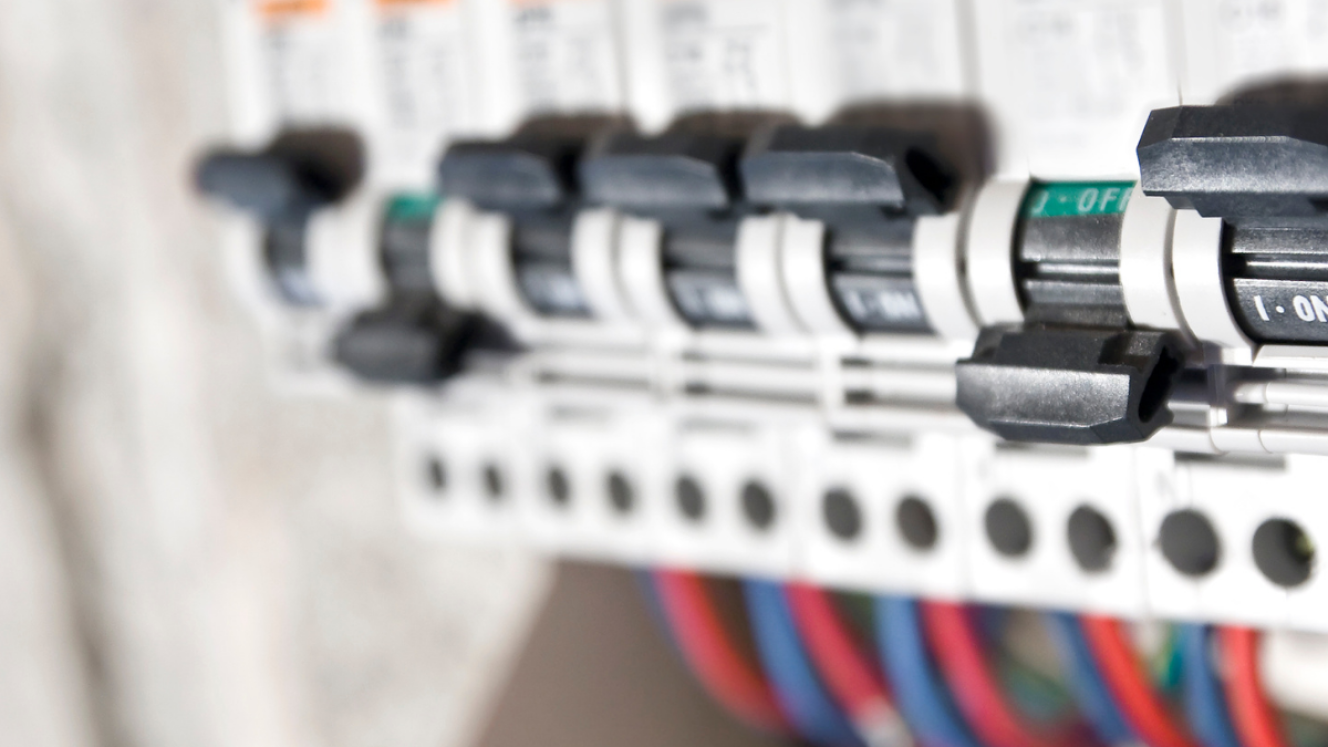
Jonker says that no one can determine compliance through visual inspection alone. He says that tests, which can cost several thousand rand each, involve assessing dimensions, material flammability, insulation, and tripping currents of circuit breakers. These can only be conducted in proper laboratories. “Even experienced people cannot reliably identify a compliant product on a shelf.”
Jonker indicates that the compliance situation in South Africa is a disaster. “A lot of non-compliant products are entering the country without proper control. We can only advise; we cannot force products off shelves. We send test results to companies and urge them to fix issues, and if not, we report to the NRCS. But not much happens after that. It is also virtually impossible to track what action, if any, the NRCS takes on any compliance issues raised,” he says.
“Different products carry different risks. If a circuit breaker doesn’t trip when needed, you could have a fire or an electrical shock. Other issues, such as incorrect marking, may not be immediately dangerous but can lead to products being used incorrectly,” says Jonker. “Buying very cheap products increases the risk of serious non-compliance, and the consumer must be aware that buying cheap poses its own risks even when done by a third party and signed off via CoC."
The accountability for the safety of electrical products being sold in South Africa also lies with the retailers, who Safehouse says have a fundamental responsibility to protect consumers by carefully verifying test reports and Letters of Authority (LOAs) before listing products.
“Retailers need to understand exactly what they are selling, and act as the first line of defense against unsafe or non-compliant goods,” says O’Leary. “Too often, retailers rely blindly on documentation that should be rigorously scrutinised, particularly when prices seem too good to be true.”
As a result, Safehouse urges both consumers and retailers to learn more about its mission to remove nefarious suppliers of unsafe electrical products and services and to eradicate dangerous products from the market. It also makes electrical safety information understandable and accessible.
While many compliant products are still updating their packaging, consumers can start identifying trusted items by the Safehouse mark on electrical appliances and other products. Consumers can also visit the Safehouse website to identify companies that have committed to producing compliant products and protecting lives and livelihoods across South Africa.
Safehouse, which operates on a peer-review model with members funding laboratory testing and committing to a strict code of conduct, supports ethical compliance, conduct credible independent testing, and encourages higher standards across the sector. The association aims to partner with authorities, not replace them, by providing technical insight and evidence-based recommendations.
“You can’t see electrical safety with the naked eye. Two products may look identical on a shelf, yet one can meet every requirement while the other fails critical safety tests. That’s why ongoing compliance testing matters, and why consumers and retailers need a way to know who is doing things properly,” says Jonker.
“This is a sector where safety should never be optional. A more informed marketplace, from sales floors to boardrooms, will drive demand for compliant products and improve national safety standards,” he says.