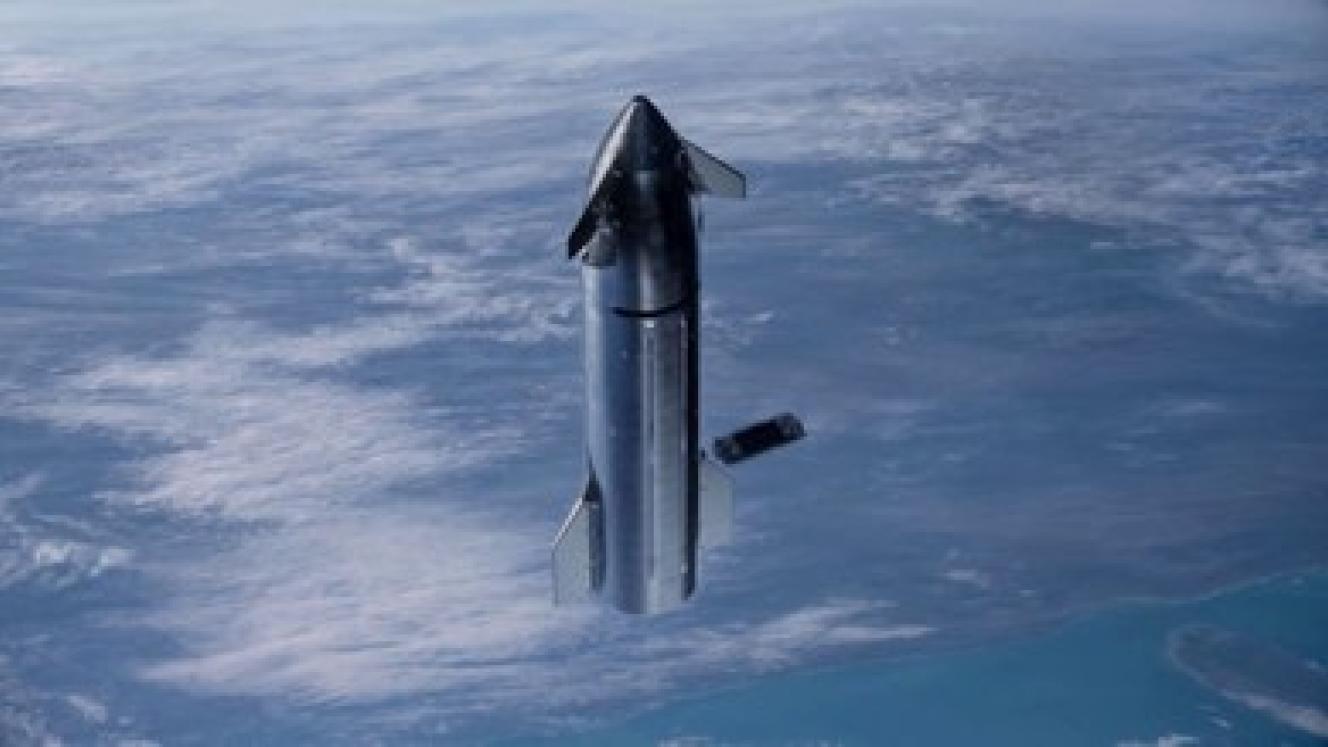
In January this year, SpaceX filed paperwork asking the US regulator, the FCC, for permission to launch a million satellites. The proposed mega-constellation would become a solar-powered AI data centre, requiring hourly rocket launches carrying a million tonnes of satellites per year.
When it became known that Elon Musk’s company was planning to launch a million satellites, condemnation was swift. Critics pointed out that the new satellites could outnumber visible stars, altering the appearance of the night sky. Additionally, the traffic volume could push Earth orbit towards the Kessler Syndrome; a dangerous cascade of satellite collisions. "The industrial scale of this is staggering," satellite expert Jonathan McDowell (recently retired from the Harvard-Smithsonian Centre for Astrophysics) told Sky & Telescope, adding that it might even be a publicity stunt.
While much criticism has focused on light pollution in the night sky and orbital safety, there is an even bigger issue: the effect on Earth's atmosphere. Satellites change the atmosphere twice: on the way up (via rocket exhaust) and again on the way down (via re-entry debris). Researchers are only beginning to understand what happens at scale.
The black carbon problem is a good example. Almost every rocket deposits black carbon (residue left over when carbon-based fuels do not burn completely) into the upper atmosphere. It is like the black soot inside a chimney. Black carbon can be tricky. By absorbing sunlight, it heats the atmosphere. By shading sunlight, it cools the atmosphere. So, while researchers are sure that black carbon will tip the atmosphere's thermal balance — they do not know which way (Maloney et al. 2022; Barker et al. 2026).
Re-entries are just as significant. For millions of years, natural meteoroids have been adding about 10 000 to 20 000 tonnes of material per year into Earth's atmosphere. Humanity is about to match that total. No later than 2040, disintegrating satellites will put as much material into the atmosphere as meteoroids do (Maloney et al. 2025; Sharma 2024). Unlike meteoroids, however, satellites are rich in industrial alloys. A million years of meteor bombardment does not tell us what a million satellite re-entries might do.
NOAA has already detected the first signs of change. About 10% of sulfuric-acid droplets in the stratosphere contain metals from disintegrating spacecraft (Murphy et al. 2023). Aluminium oxides found in these droplets are a concern because they help destroy ozone, Earth's natural sunscreen.
Studies attempting to predict the effects of mega-constellations have proliferated since the Starlink programme began in 2019. The catch is that nearly all the forecasts assume Starlink-sized swarms of a few tens of thousands of satellites. A million satellites is another problem entirely.