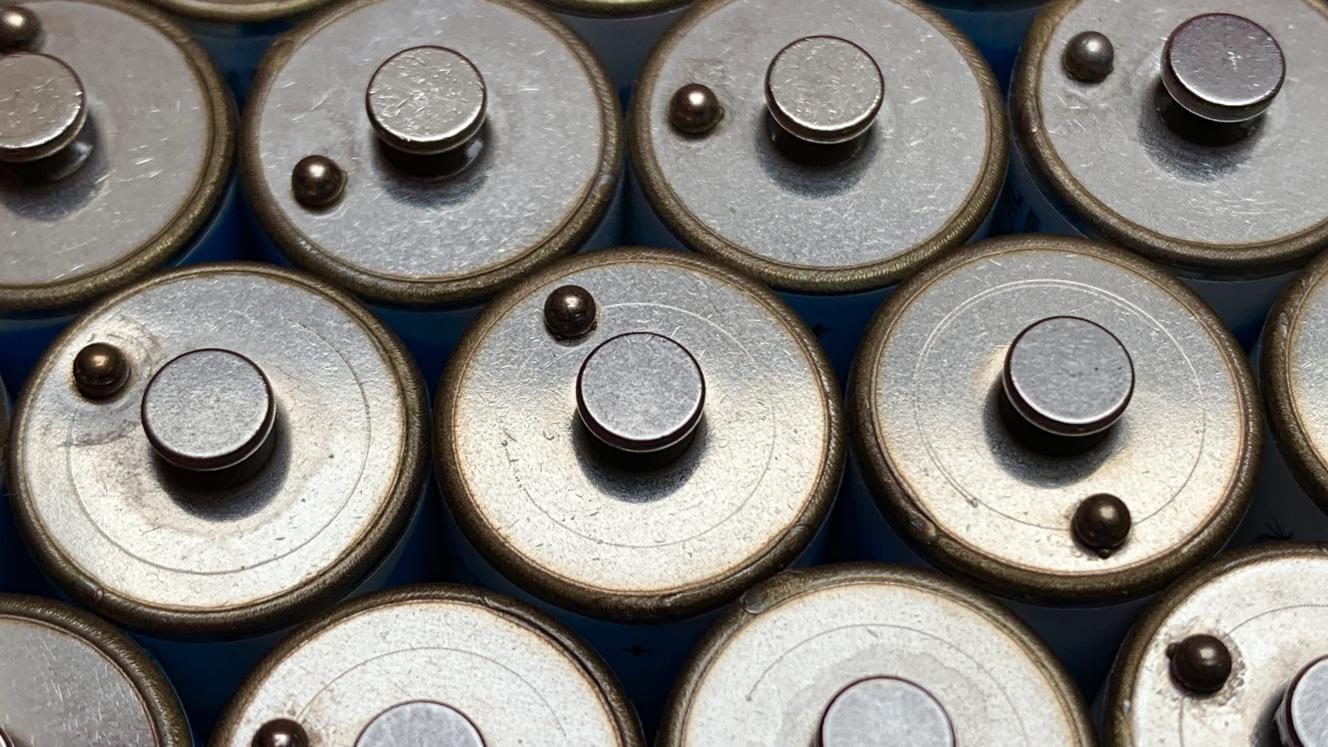
In the early 1900s, electric cars outnumbered petrol-powered vehicles on American roads, and they ran on lead-acid batteries. Thomas Edison believed he could improve on this with a nickel-iron battery offering longer life, greater range and faster charging. It never quite delivered at the time, but the idea has not disappeared.
Today, researchers are revisiting that concept. An international collaboration co-led by UCLA has developed a nickel-iron battery approach that may suit energy storage at solar farms. Early results show charging in seconds rather than hours, along with more than 12 000 charge and discharge cycles.
The design uses tiny metal clusters formed with the help of proteins, then bonded to a two-dimensional material only one atom thick. Despite the advanced materials involved, the process itself is relatively straightforward. As study co-author Maher El-Kady explains, the method relies on widely available materials, gentle heating and simple preparation steps rather than complex fabrication techniques.
Batteries that get an assist from biology
The work draws on processes found in nature. Bones and shells form through proteins that act as scaffolds, allowing minerals to accumulate in structured ways. The researchers applied a similar idea, using proteins to guide the formation of nickel and iron clusters.
In this case, proteins derived from beef production were used as templates. Their folded structures limit the size of the metal clusters to less than five nanometres. These were combined with graphene oxide, a material made up of single-atom-thick carbon sheets containing oxygen.
Heating the mixture transforms it. The proteins carbonise, the oxygen is removed, and the metal clusters become embedded within the structure. The result is an aerogel that is almost entirely air, yet provides a stable framework for electrochemical activity.
Surface area as a superpower
Performance comes down to surface area. The more exposed surface available, the more space there is for the chemical reactions that drive battery operation.
The graphene aerogel provides that space through its structure, while the extremely small metal clusters increase the proportion of atoms available for reaction. As particle size decreases, surface area grows far faster than volume, allowing more efficient charge transfer and faster cycling.
This translates into quicker charging and discharging, as well as improved overall efficiency.
Prospects for the future
The technology still does not match the energy density of lithium-ion batteries, which remain dominant in electric vehicles. For that reason, its immediate value is likely elsewhere.
One potential application is large-scale energy storage, particularly at solar installations where excess electricity generated during the day needs to be stored for use at night. Backup power for data centres is another possibility.
Edison’s idea did not reshape transport in his time. It may yet find its place in a different part of the energy system.