Wiaan Vermaak, CCO at Digital Parks Africa, shares insight on the transforming data centre landscape in South Africa.

The modern data centre has become a fundamentally different environment from what it was even a decade ago. High-density computing, AI‑driven workloads, and escalating energy demands have reshaped the operational landscape, compressing the margin for error to almost zero.
In this new reality, the ability to see, understand and respond to what is happening inside the facility in real time is no longer a technical advantage; it is the foundation of resilience.
The change begins with density. Where a rack once drew 2 kW, today’s deployments routinely operate at significantly higher levels in excess of 6 kW, with AI clusters pushing even further. This concentration of power means that conditions can deteriorate much faster than before when something goes wrong.
A cooling fluctuation that previously took hours to become dangerous can now escalate in minutes. Batteries discharge faster, thermal loads spike more aggressively, and the operational envelope narrows.
In these environments, operators cannot rely on delayed alerts or periodic checks. They need immediate, high‑resolution insight into every component of the ecosystem.
Why reactive monitoring no longer works
Traditional reactive monitoring simply cannot keep pace. Systems that poll every fifteen minutes or rely on delayed alert mechanisms were designed for a slower, less complex era. They assume that someone is available, paying attention and able to interpret the information quickly enough to act.
However, automation must also be applied with caution. Over-centralised or poorly governed automation systems can introduce operational risk if they are not designed with fault tolerance and localised control in mind. When thousands of interdependent devices are operating at high density, and when a deviation can become a failure within seconds, that assumption falls apart.
Real‑time monitoring tells you something is deviating from expected behaviour, giving you the opportunity to intervene before failure occurs - a distinction that is critical in environments where peak demand can fluctuate rapidly and temporarily exceed average operating capacity, making high-resolution visibility essential to maintain stability.
From visibility to decision-making intelligence
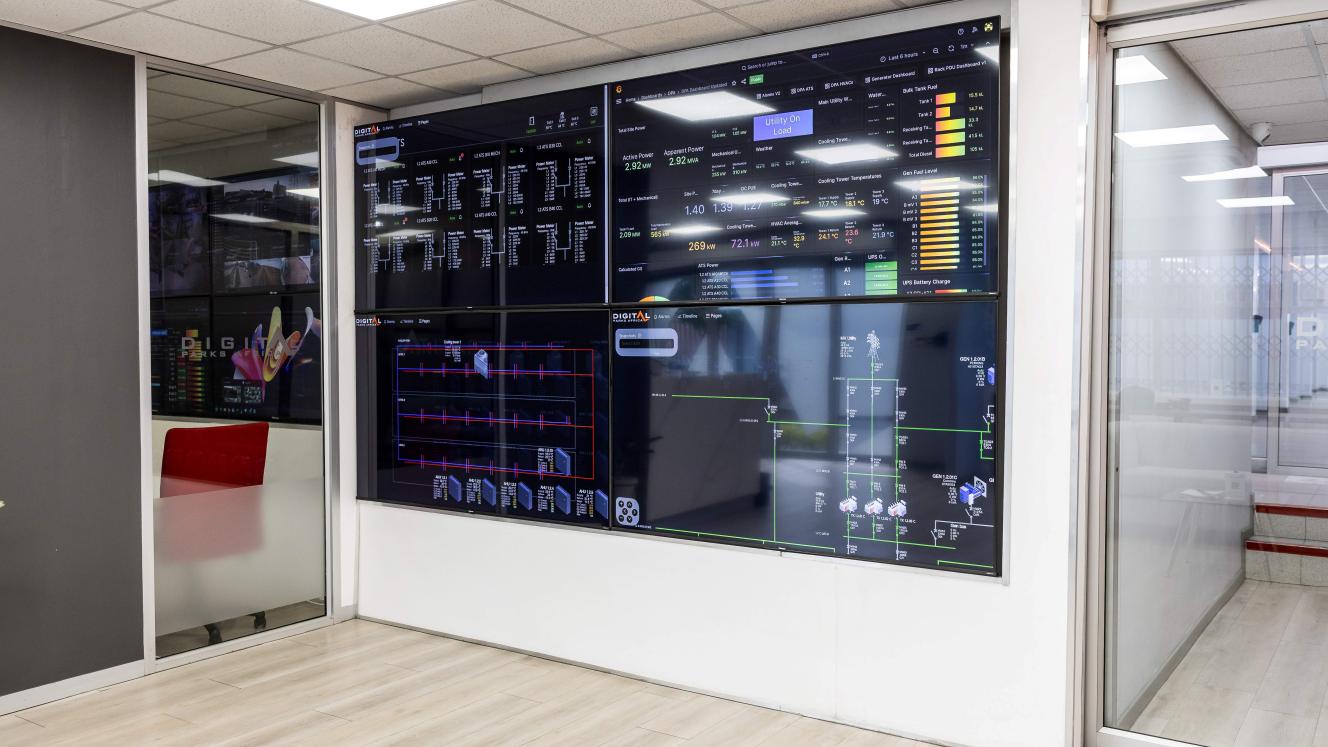
The most important metrics in a modern data centre reflect live system behaviour. Power use, load balance, cooling performance, thermal stability, battery health, generator status, equipment capacity, and environmental conditions together provide a continuous operational view.
When captured at high frequency, these data points allow operators to identify behavioural trends, performance deviations, and emerging operational risks under changing load conditions and how they may evolve.
Value iomes from monitoring individual systems and also from consolidating data across platforms into a single operational view. Without this, operators are forced to work across multiple systems and fragmented datasets, reducing situational awareness.
Real‑time visibility drives uptime and trust
Downtime is no longer measured only in financial loss; it also affects customer trust, contractual obligations, and business continuity. Real‑time visibility reduces this risk by enabling early anomaly detection, faster response, and complete transparency. Live monitoring is also available online and can be accessed via a desktop or mobile app for early warning or fault detection.
Customers increasingly expect access to operational data, particularly in mission-critical environments. In many cases, they can view the same real-time telemetry as operators, reinforcing confidence in the stability of the infrastructure.
This transparency has become increasingly important, as it affects both technical and commercial outcomes, particularly when infrastructure performance directly impacts customer risk, compliance, and continuity requirements. Improved transparency strengthens the trust relationship between provider and customer as performance is visible, verifiable, and auditable.
Automation and analytics further enhance this capability. AI-assisted application software analyses historical and real-time data to detect patterns that may indicate inefficiencies or early signs of failure in cooling, power, or generator systems.
However, automation is most effective when it supports human decision-making rather than replacing it. In many cases, automation is best applied to efficiency optimisation, while fault tolerance decisions remain carefully controlled and context-driven. Predictive monitoring is therefore not about replacing engineers; it is about equipping them with the pre-emptive detection intelligence needed to stay ahead of risk.
Efficiency and cost management in a constrained energy market
In South Africa, the case for real‑time monitoring is even more compelling. Power constraints, rising energy costs and the need for greater efficiency place enormous pressure on operators to optimise every kilowatt of IT load.
High‑resolution telemetry enables more efficient cooling strategies, better load balancing, reduced waste, and stronger Power Usage Effectiveness (PUE) performance. These improvements translate directly into cost savings, operational stability, and more sustainable operations. A practical example from live operations shows how real-time monitoring can reveal unintended load increases driven by application behaviour or unused infrastructure left active, allowing operators to accurately attribute cost and adjust capacity usage accordingly.
This level of visibility enables both operational assurance and customer transparency. In some cases, anomalies like subtle cooling deviations or irregular generator behaviour are detected early enough to prevent disruption and maintain uptime. These outcomes demonstrate the practical value of continuous, high-resolution monitoring in mission‑critical environments.
From reactive to resilient
Organisations must recognise that high‑density and AI‑driven workloads demand real‑time visibility, and that reactive monitoring is no longer sufficient for the speed and complexity of modern operations. Predictive insights depend on high‑resolution, high‑scope data, and the ability to act on that data quickly and safely.
Real‑time monitoring improves uptime, efficiency, and customer confidence, with transparency emerging as a competitive differentiator in its own right. Ultimately, real‑time monitoring is foundational to resilient and efficient data centre operations. It enables organisations to move from reactive firefighting to predictive control, ensuring long-term stability in an increasingly complex digital infrastructure landscape.