
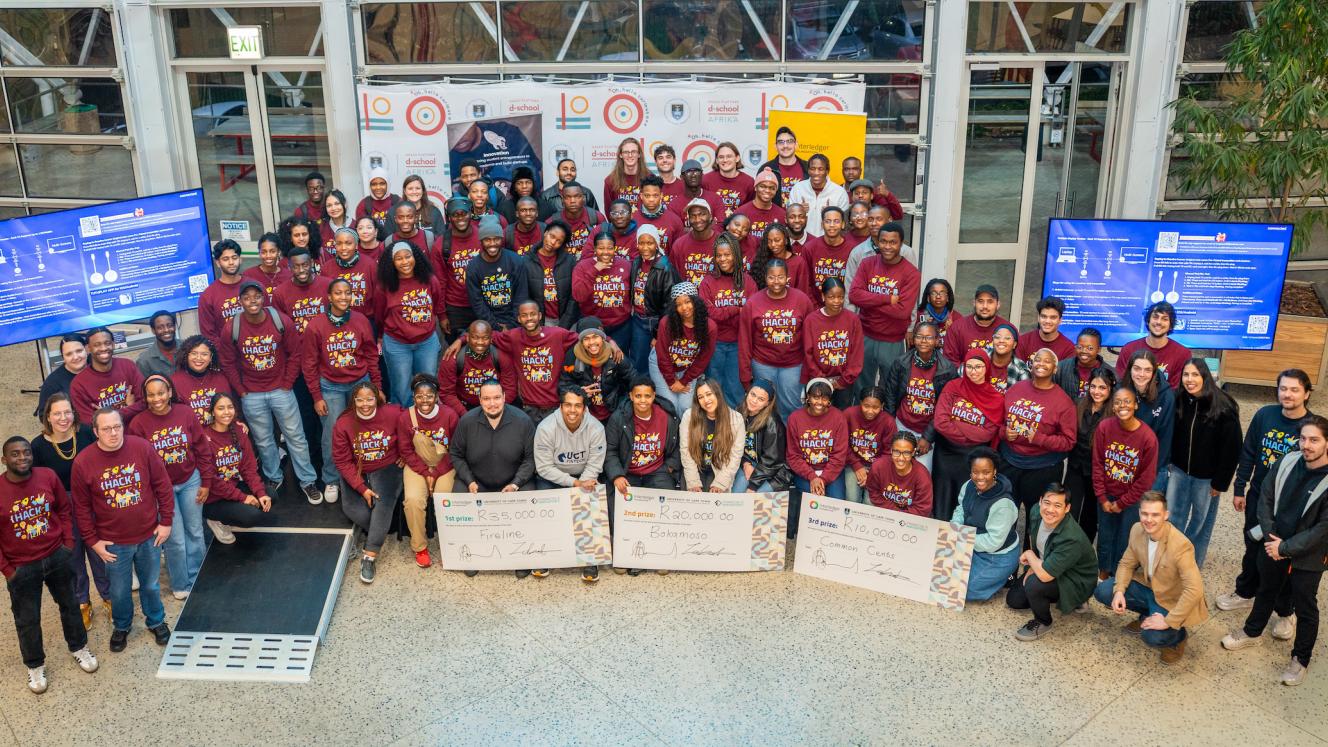
The third Interledger Foundation and University of Cape Town (UCT) Financial Innovation Hub Hackathon took place at the Hasso Plattner School of Design Thinking Afrika at UCT on Saturday, 27 June, showcasing the ingenuity and technical capability of young South African fintech innovators as they developed homegrown solutions to real-world payment challenges.
80 Participants from six tertiary institutions – UCT, Eduvos, Sol Plaatje University, University of the Western Cape, Cape Peninsula University of Technology, and the University of the Free State, focused on expanding access to digital financial services through the Interledger’s Open Payments technology.
Judged by Alex Lakatos, Chief Technical Officer at the Interledger Foundation; Matthew de Haast, Co-Founder and Chief Technical Officer at Fynbos Money; and Dr Allan Davids, Senior Lecturer, Director of the UCT Financial Innovation Hub, and convenor of UCT's MPhil in Financial Technology, the Hackathon included women in the top three teams for the first time in its history.
The winning Fireline trio won R35 000 for producing a community-led micro-insurance model that provides fast cash within hours of a home fire where conventional insurance is absent.

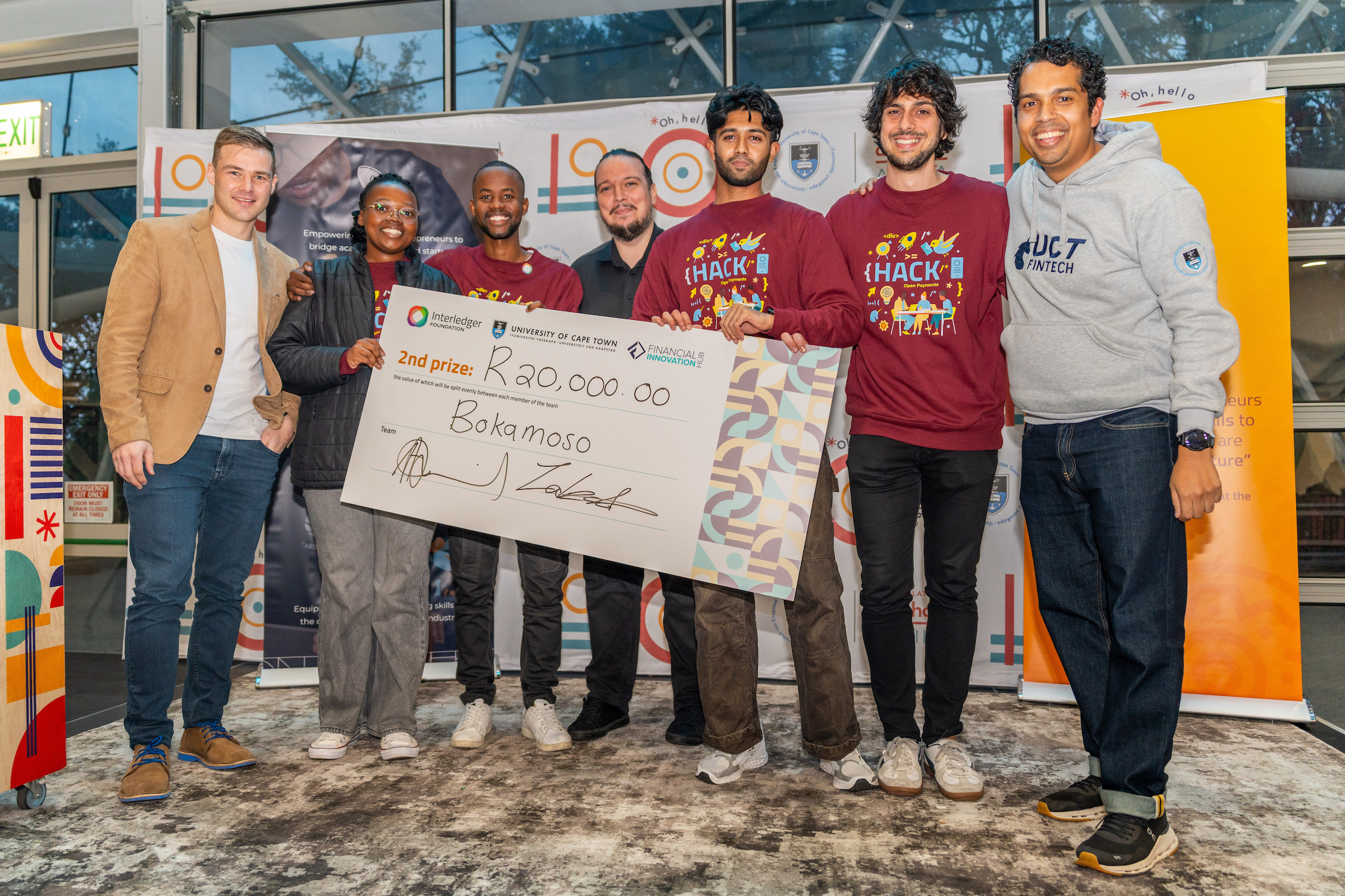
Placing second and winning R20 000 was Bokomosa, whose application turns routine payments into automated savings contributions to help address South Africa's retirement savings challenge, where only 6% of citizens retire financially independent.
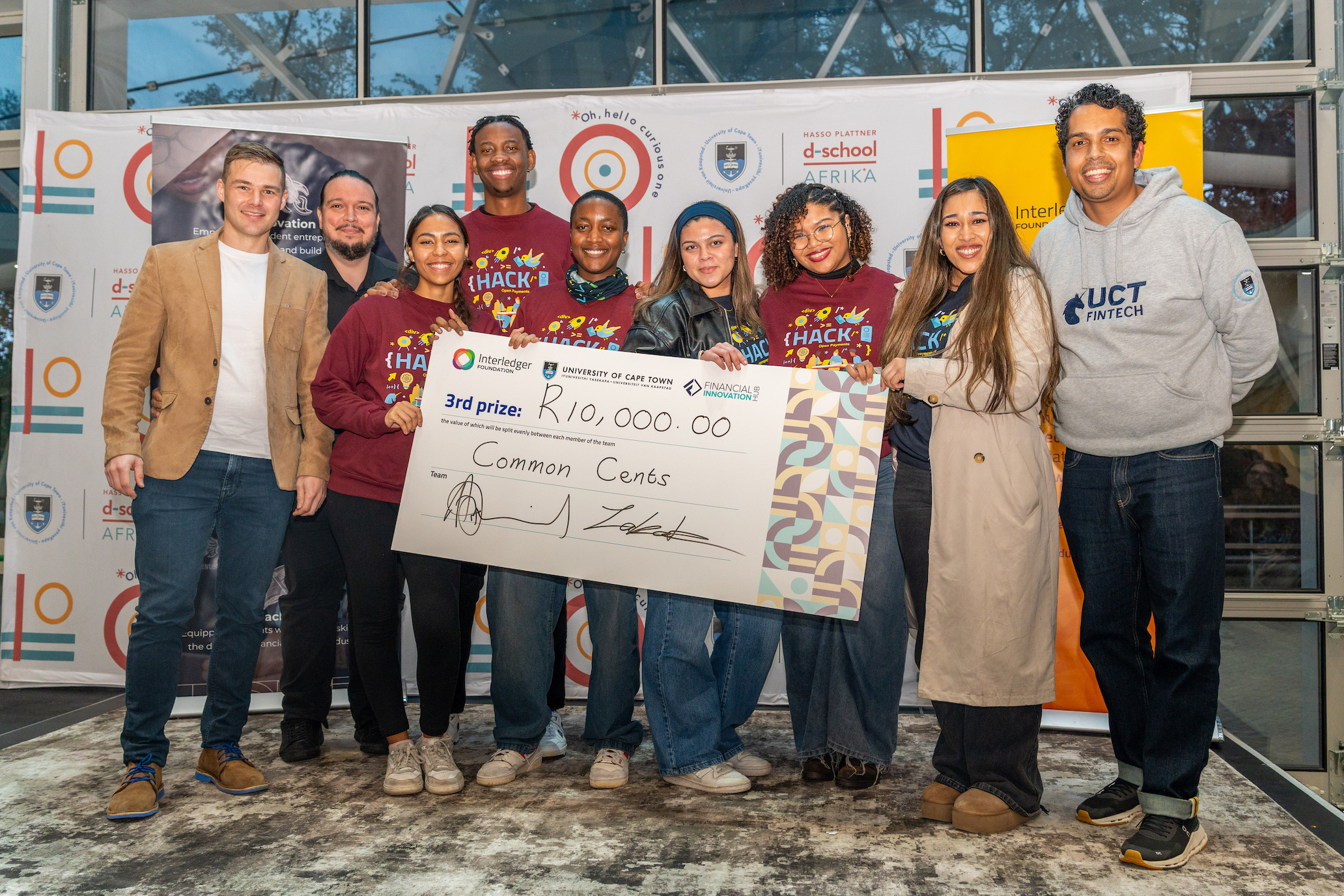
Third place, and R10 000, went to Common Cents, whose accessible platform converts informal cash payments into verified financial records, enabling informal, seasonal and rural workers to demonstrate a credible income and access services such as insurance, credit and formal employment benefits.
The Hackathon followed a week-long bootcamp during which Interledger software engineers and Dr Davids presented to and mentored the participating students. The teams were then judged on criteria including creative problem framing, passion, understanding of the problem and proposed solution, and innovation.
Says Davids, “When the average person thinks about fintech, their mind immediately goes to finance and technology. However, this space includes so many other disciplines, such as computer science, economics, and information systems. Hackathons like this bring all these different disciplines together into one space, giving (participants) the education, structure and support to reimagine the way finance looks and build a financial system that serves them and their community.”
Speaking on behalf of her winning three-woman team, Mridula Kumar from team Fireline says the Hackathon offered the ideal platform to apply what they were learning as part of their MPhil in Financial Technology studies at the Financial Innovation Hub.
“Fintech is a rapidly advancing technology in our world today, and a lot of people are left behind when these advancements happen,” says Whyte. “In South Africa, a particular problem that we face are fires in informal settlements so that was one that we focused on in order to develop Fireline. There are only four to five days a year when the fire department isn’t responding to a fire.
“These fires are affecting people who don’t have insurance. They’re not accounted for, they’re not covered, so this is our way to make fintech more inclusive and to bridge finance and technology in a way to help people for the greater good and make a difference for the future.”
This year’s edition of the Hackathon also stood out for incorporating Hub and Hackathon alumni as mentors and instructors, enabling students to benefit from their technical expertise.
One of these mentors was Marc Levin, a current Interledger bursary recipient studying for an MPhil in Financial Technology at the Financial Innovation Hub and a participant in the 2024 Hackathon, where his team placed second with a remittance-budgeting solution. During that competition, Levin experienced first-hand the challenges of getting code to run and overcoming basic technical setup issues. To help this year's participants, he developed a visual teaching aid that shifted the focus on the Hackathon day from troubleshooting technical bugs to understanding and applying open payment technology.
Davids says that changes such as the introduction of alumni mentors not only gave participants greater confidence in their projects but also helped maintain high energy levels despite the pressure of developing an application in less than a day.
Building on the success of this year's event, the partners intend to expand the programme next year by engaging more academic institutions from across South Africa. According to Lakatos, the long-standing partnership between the Interledger Foundation and UCT's Financial Innovation Hub continues to deliver value because both organisations share a commitment to openness, inclusiveness and innovation.
"We invest in the Hub and events like this because they are a practical testbed to develop people, validate the Interledger technology, and improve documentation in real time," says Lakatos. "Our shared values continue to produce tangible outcomes, from student-built features and onboarding wins to cross-border test transactions."