Women remain underrepresented in STEM fields across Africa, a gap that continues to shape who participates in research and how problems are solved. A long-running initiative by L’Oréal and UNESCO aims to shift that balance, with South Africa now formally included in its broader Sub-Saharan Africa programme.
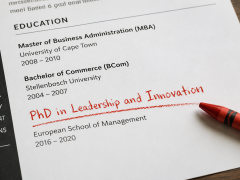
The L’Oréal–UNESCO For Women in Science programme has been active in the region for more than two decades, supporting women at the doctoral and postdoctoral levels. Since 2010, it has awarded over 320 endowments across the continent, backing research careers that may otherwise have struggled to gain traction.
South Africa previously operated within a separate national programme. Its inclusion in the Sub-Saharan Africa cohort brings local researchers into a wider network of peers and resources, while aligning the country with a more coordinated regional effort.
The programme focuses on four core areas: formal and life sciences, environmental and physical sciences, engineering, and technological sciences. Applications for the 2026 intake are now open to candidates across 49 countries, including South Africa, with submissions closing on 15 May.
For many researchers, the support extends beyond funding. Access to a broader scientific community and increased visibility can play a decisive role in sustaining long-term work, particularly in environments where research pathways are uneven or under-resourced.
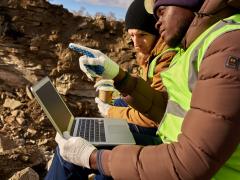
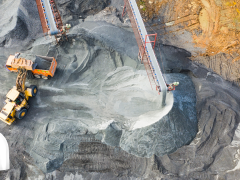
Dr Bambesiwe May, a 2025 recipient, is one example. Her work in Earth Sciences addresses a persistent environmental challenge in South Africa: how to reduce the risks associated with mine dumps while recovering residual value from them. It is the kind of applied research that sits at the intersection of environmental management and resource optimisation, with direct implications for both safety and sustainability.
“It is an honour to be part of the programme. The support allows me to keep working on real-world problems. I hope young women see that science is human, creative, and full of opportunities to make a difference.”
Programme lead Michelle Gololo points to the broader impact of sustained support for women in science.
“When women are supported to thrive, they advance their research and contribute to the development of their communities and countries.”
While the structural barriers facing women in STEM are well-documented, progress has been uneven. Initiatives like this do not solve the problem on their own, but they do create access points where talent can move forward, particularly in regions where funding and mentorship are not always consistent.
For South Africa, inclusion in the regional programme signals a shift towards greater collaboration across borders, with researchers contributing to shared challenges that extend beyond any single country. From environmental pressures to public health and infrastructure, the need for diverse scientific perspectives continues to grow.
Applications for the 2026 For Women in Science Sub-Saharan Africa Programme close 15 May 2026. Eligible scientists are invited to apply via the official portal: https://www.forwomeninscience.com/challenge/show/157