South Africa’s commercial and industrial sector is moving steadily towards energy storage, as businesses look for more reliable and cost-effective ways to manage power. A newly signed 1,155 MWh battery storage agreement between Sungrow and Herholdt’s Group aims to support the rapid market growth.
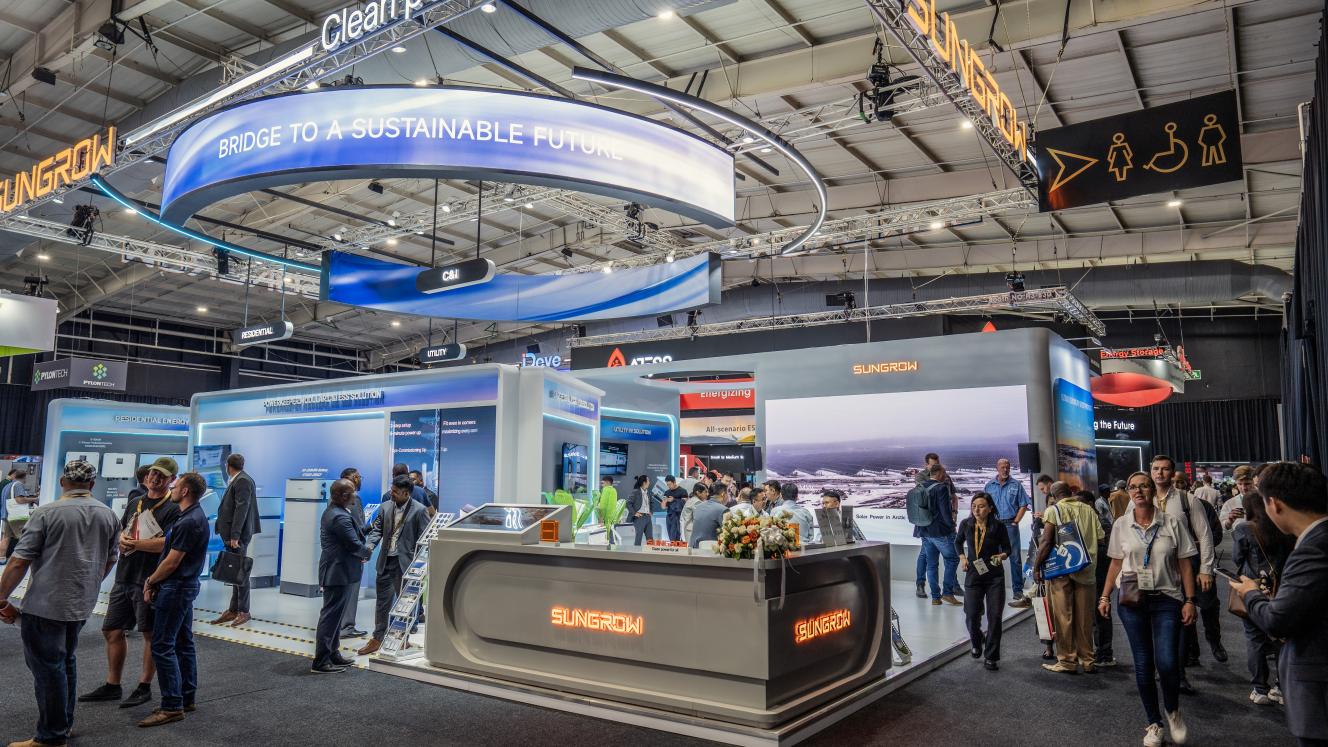
The deal, announced at Solar & Storage Live Johannesburg, will see commercial and industrial battery energy storage systems deployed across multiple sites in phases. It is one of the larger agreements of its kind in the local market and reflects increasing demand for solutions that can stabilise operations in an unpredictable energy environment.
At the event, Sungrow also showcased its SG465 inverter, designed to deliver high performance and reliability for large commercial and utility-scale projects and shared insight into its utility-scale energy storage platform, PowerTitan 3.0, developed to enhance safety, scalability, and lifecycle performance for large energy infrastructure projects.
For many businesses, the pressure is no longer only about managing costs. It is about maintaining continuity. Load shedding, grid instability, and rising tariffs have pushed energy from a background utility into a central operational concern. Storage systems are increasingly being used to manage peak demand, reduce downtime, and support the integration of renewable energy.
“This agreement highlights our confidence in the long-term potential of the commercial and industrial energy storage segment, as well as the demand for reliable and scalable solutions in local applications,” says Nigel Sun, Head of Sungrow, Sub-Saharan Africa.
While large-scale renewable projects tend to dominate headlines, much of the current movement is happening at the commercial level. Warehouses, manufacturing facilities, and large retail operations are investing in hybrid systems that combine solar generation with storage, allowing them to operate with greater independence from the grid.
The mining sector is also a key area of focus. Remote sites with energy-intensive processes require consistent and well-managed power, often in environments where grid access is limited or unreliable. Hybrid systems that combine solar, storage, and conventional generation are becoming a practical solution, improving both resilience and efficiency.
The growth of these systems is closely tied to their adaptability. Businesses are not always in a position to invest in large, once-off infrastructure upgrades. Modular storage systems that can be expanded over time are gaining traction, allowing capacity to grow alongside operational needs without major redesign.
South Africa’s energy challenges are not unique, but they are acute. As a result, the local market is becoming an important testing ground for technologies that prioritise flexibility, reliability, and long-term performance.
The agreement between Sungrow and Herholdt’s Group sits within this broader context. It reflects a market that is no longer waiting for stability to return, but is actively building around uncertainty, using storage and integrated energy systems to create more predictable operating conditions.
As more businesses adopt these approaches, energy storage is shifting from a niche solution to a core part of how commercial and industrial operations are run.