It’s still early in 2026, but the headlines suggest a much longer year. Current global circumstances have seen trade shifting dramatically. De minimis exemptions are being recalibrated. Tariffs are volatile, and airline networks are adapting to airspace changes and challenges, particularly amid the events transpiring in the Middle East. Matthew Larkins, Manager, Airfreight, at C. Steinweg, suggests an airborne solution.

While the public narrative primarily calls out uncertainty, businesses need to know if they can keep their supply chains moving without eroding margin. Global air cargo demand reached a record volume in 2025, growing year-on-year.
At the same time, yields softened and capacity edged ahead of demand on several trade lanes. Carrier pricing has become increasingly dynamic. Maritime corridors are reopening and competing more aggressively for discretionary cargo. In Southern Africa, chemical imports started the year slowly, and the expected March recovery has been delayed. Currency volatility has introduced additional cost risk, with exchange rates moving sharply within days.
Still, trade continues, production marches on and the pressure is all down to the narrowing window for decision-making. This is where airfreight’s real value becomes visible.
Inbound, it protects uptime. Critical inputs, spares and time-sensitive components prevent stoppages that ripple across production lines. Outbound, it protects customer commitments and contractual milestones. For a COO, the issue is continuity. For a CFO, it is the cost of downtime versus the cost of freight. For a CEO, it is reputational reliability in a volatile environment.
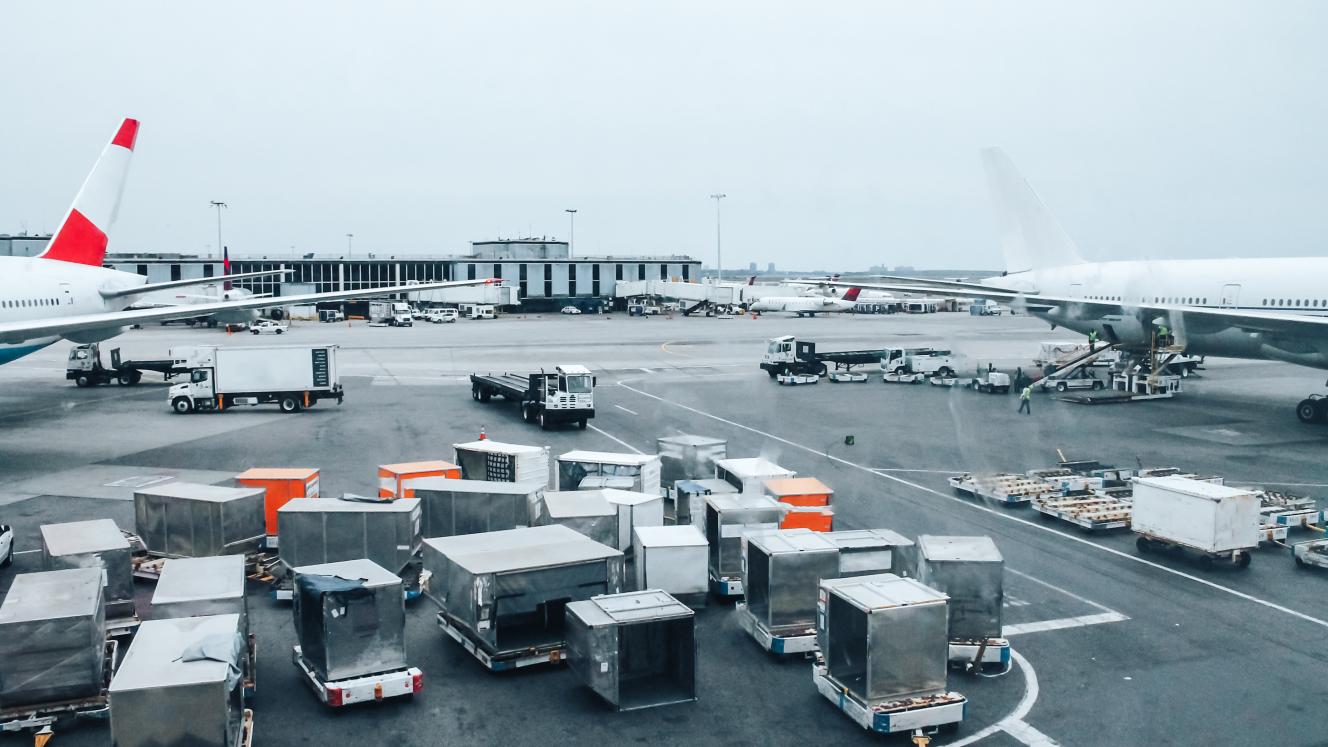
Airfreight, used deliberately, is at the intersection of those three concerns. The misconception that still lingers is that airfreight begins at uplift. The truth is, the aircraft is predictable. The complexity is really on the ground.
Documentation readiness, correct classification, permit alignment, customs sequencing, border coordination and clear chain-of-custody ownership determine whether time saved in the air translates into operational certainty. Where these elements are fragmented, speed becomes irrelevant.
This distinction becomes particularly important in African corridors, where border delays of up to 24 hours are not unusual and regulatory interpretation can vary across jurisdictions. In environments like these, network reach alone does not mitigate risk, but control can.
Recent airspace disruptions in the Middle East provide a useful illustration. Airlines have redirected flows through African hubs such as Nairobi and Addis Ababa. Capacity has been reallocated quickly. While these shifts may prove temporary, they demonstrate how fluid network architecture has become. Businesses that already have routing flexibility and integrated oversight can redirect cargo with limited friction. Others struggle to adjust.
Within this context, consolidation strategy deserves closer attention. Ad hoc air freight remains essential for urgent one-off movements. However, reliance solely on spot uplift exposes businesses to daily pricing volatility and inconsistent planning cycles. Structured consol services operate differently. By aggregating volume under a master airwaybill and achieving higher airline weight breaks, they access more stable rate structures and improved space allocation. Scheduled departures introduce a planning rhythm. Centralised control over house airwaybills strengthens documentation accuracy. Fewer handling points reduce the probability of cargo splits or loss.
In a yield-softening market and with currency fluctuations, predictability protects margins. It allows businesses to plan rather than react. Airfreight performs best when embedded within a defined decision framework.
That framework should include pre-segmented cargo categories, agreed-upon mode-switch thresholds, and a structured documentation discipline before uplift. It should assign ownership across each interface, from origin handling to clearance, bonded storage and final delivery. It should maintain visibility and accountability across milestones.
Routing in Ndola reflects this approach. Legacy gateway logic would have extended overland exposure into the Copperbelt, adding variability. But by redesigning the journey around operational requirements, reducing road risk and aligning clearance planning with site timelines, airfreight shifted from emergency spend to engineered continuity.
As trade policy continues to evolve and currency exposure complicates procurement timing, waiting for stability is not a strategy. The businesses that navigate this cycle most effectively will not be those that predict the next disruption. They will be those who build control into their supply chains before it arrives.
Airfreight is no longer defined by speed alone. It is defined by how intelligently it is deployed. In compressed markets, disciplined flexibility is your competitive advantage, and should not be considered optional.