Physical security in schools and learning institutions is a hot topic in South Africa, with the Gauteng Department of Education recently announcing plans to use AI-powered cameras and biometric access to strengthen school safety in the province.
Though the topic may be a burning issue currently, schools worldwide are expected to maintain a security posture above and beyond others in terms of personal safety, and most commonly deploy cameras to secure campus boundaries and common areas. Rudie Opperman, Manager for Engineering & Training Middle East & Africa at Axis Communications, shares his insight.

Smart surveillance offers a lot of opportunities, but it also comes saddled with important questions, most notably those surrounding data privacy and the overall effectiveness of systems. Answering these questions requires administrators and decision-makers to consider these systems from top to bottom, the kinds of technologies they deploy, and the solutions that enable a safe and secure environment without disruption or inconvenience.
One network, many parts
The goal of school-wide security is to give security teams the tools for real-time detection, emergency preparedness, and immediate incident response. To achieve that, teams need access to a networked system that centralises security functions and management. These systems then provide teams with the situational awareness to trigger a rapid response, while shifting their security posture from reactive to proactive.
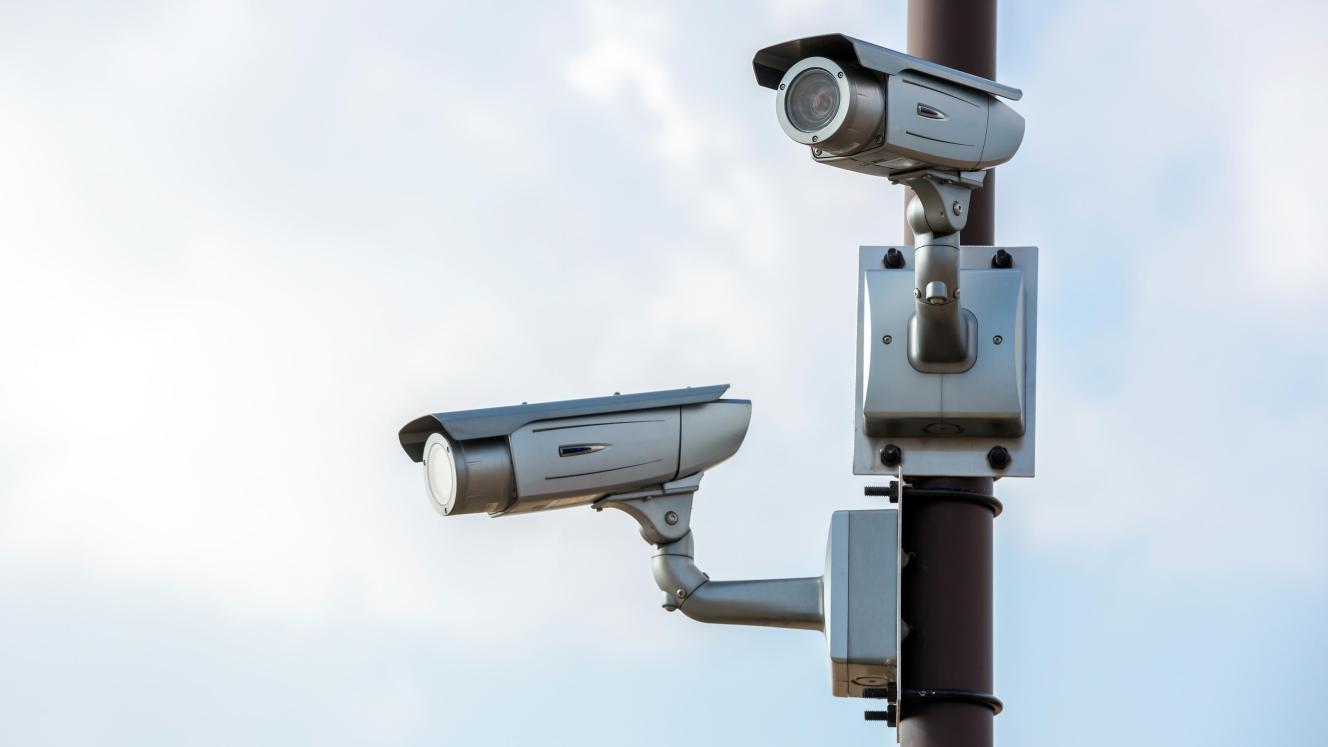
An optimised system, one that provides comprehensive coverage, is made up of different parts. One part is access control, where schools replace traditional entry methods, such as keys. Another part is advanced video surveillance, featuring low-light, high-resolution cameras equipped with analytics. This enables systems to identify behaviours, such as vehicles travelling in the wrong direction or a person entering a space after hours. Finally, surveillance can be integrated into emergency communication systems, such as school public address systems that can then broadcast automated alerts.
Critically, this kind of arrangement is not geographically restricted to one school or campus. Institutions with multiple campuses and sites can run a single system via a centralised multisite management platform that lets them oversee and control all devices from a single interface. This also helps administrators enforce and maintain permission-based rules, meaning that only authorised personnel can access the system or only the parts that are relevant to them. The result is total coverage and a streamlined approach to maintaining safety and security.
Addressing data privacy and security
Smart surveillance, particularly that which leverages AI (artificial intelligence) and ML-based (machine learning) technologies, in the classroom has prompted legitimate concern towards its impact on data privacy. Legislation such as South Africa's POPIA (Protection of Personal Information Act) also places restrictions on what personal data and information can be captured and stored, and thus, school administrators need to ensure compliance with any systems they use. Meanwhile, certain areas of schools remain strictly off-limits for cameras of any kind.
This is where deploying different surveillance technologies especially starts to demonstrate value. Camera operators can apply static, mosaic or dynamic privacy masking- software-based solutions that let them either hide a selected area on live and recorded video, or mask elements such as human faces or license plates. Alternatively, in place of traditional video, operators can install thermal cameras or audio sensors, which let them detect incidents based on non-identifying variables such as heat or sound.
Meanwhile, operators need to consider how sensitive data is protected. The most robust solutions utilise hardware-based cybersecurity platforms, such as Axis Edge Vault, which protects the device’s identity and ensures that sensitive data can only be accessed by authorised personnel. Securing and protecting school environments must always encompass security systems themselves, whether it’s a single camera pointing at a playground or a collection of devices installed throughout a campus.
Choosing what works
Typically, security spending revolves around worst-case scenarios. That is not the wrong mindset for security teams and their organisations to have, but the day-to-day benefits of deploying a comprehensive system should also factor in what solutions they decide to invest in. As two-thirds (66%) of security chiefs expect their physical security budgets to increase in the next twelve months, generating value from said system is more important than ever.
Using a visible security system made up of different technologies, schools and institutions can deter passive threats such as vandalism and unauthorised access, as well as protect assets and uphold student safety 24/7. Additionally, integrated security tools introduce a layer of automation that frees up operators and security personnel to focus on more important responsibilities.
Choosing the right solution is not a single-step process, though. Institutions must ideally conduct a thorough security assessment, determine their unique needs and a subsequent budget, and then evaluate vendors and system scalability. Leveraging open platforms is especially important as institutions can add new devices or technologies over time and not be reliant on a single brand. Finally, a cybersecurity strategy that enforces guidelines and support standards like IEEE 802.1X for network access control ensures systems are protected from cyber threats.
South Africa’s education sector is constantly evolving, as are the threats and security vulnerabilities that institutions face. By taking a calculated and intelligent approach to physical security, institutions can provide secure, protected learning environments where technology and digital trust work together to safeguard the next generation of leaders.